

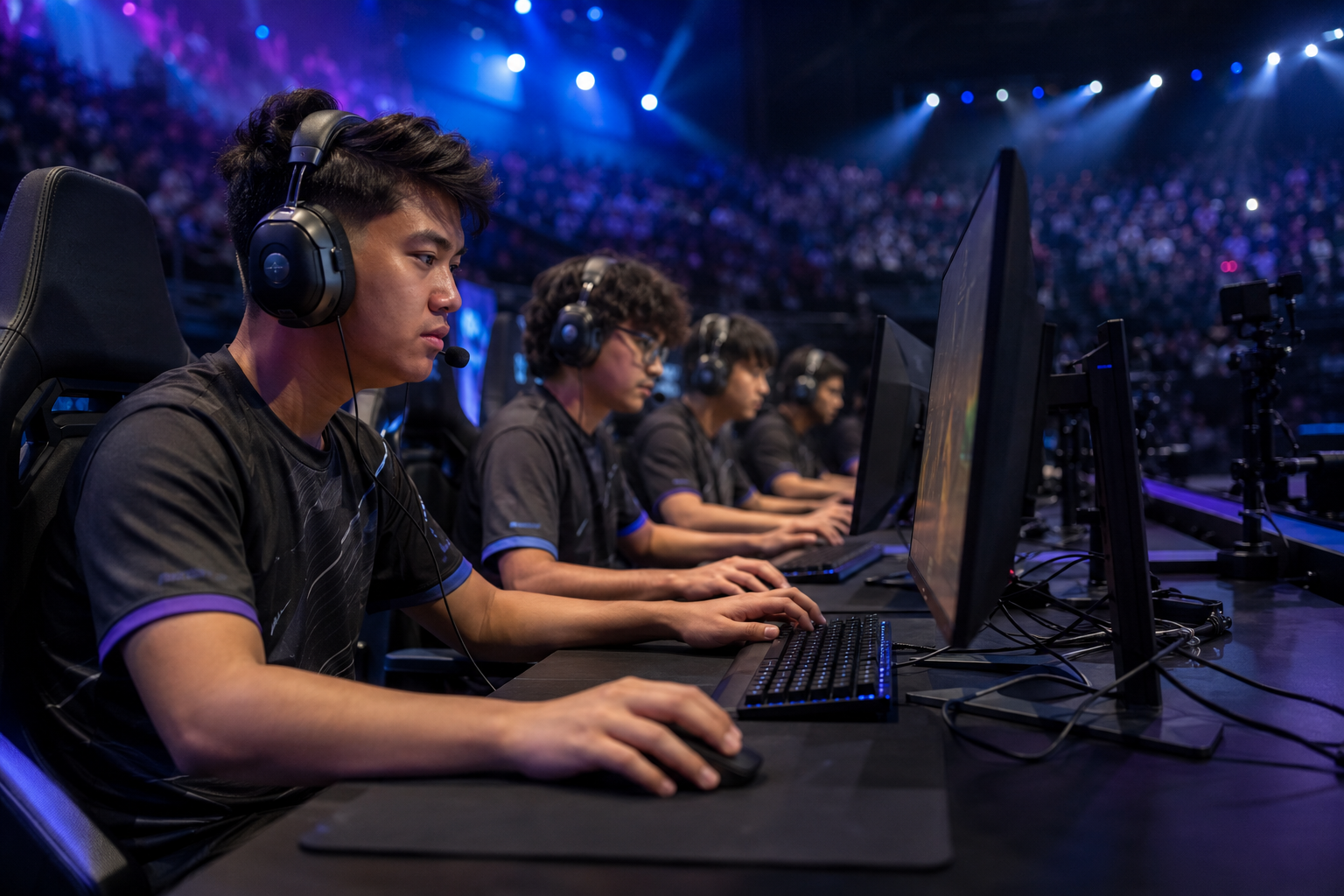
The esports industry has evolved from a niche gaming community into a global entertainment powerhouse. Competitive matches now fill major arenas, attract millions of online viewers, and create professional opportunities for talented players from different backgrounds.
This transformation is changing how society views gaming. Players are no longer seen merely as hobbyists spending hours in front of a screen. The best competitors are recognized as professional athletes who train, compete, build personal brands, and represent teams on international stages.
The Esports Industry Is Entering a New Era
The modern esports industry operates through a growing network of game publishers, tournament organizers, professional teams, streaming platforms, sponsors, media companies, and fan communities.
Each part of this ecosystem supports the others. Publishers develop competitive games, organizers create tournaments, teams recruit promising players, and streaming platforms distribute matches to global audiences.
Fans can follow the global esports ecosystem almost instantly through live broadcasts, match highlights, player interviews, and tactical discussions. This accessibility has helped competitive gaming reach audiences beyond traditional gaming circles.
Esports is also becoming more structured. Professional organizations now employ coaches, analysts, team managers, content creators, physiotherapists, and performance specialists. The industry is no longer built around players alone.
Competitive Gaming Becomes Mainstream Entertainment
Esports events combine high-level competition with entertainment. Dramatic entrances, energetic commentators, advanced broadcast graphics, instant replays, and live audience reactions make every major event feel like a modern sports spectacle.
Popular competitive titles have built loyal communities across multiple regions. Fans follow team rivalries, roster changes, qualification campaigns, and championship races with the same passion found in traditional sports.
The demand for reliable competitive gaming coverage continues to increase because supporters want more than final scores. They also want tactical breakdowns, player stories, team statistics, and behind-the-scenes developments.
Major Tournaments Drive Industry Growth
A major tournament esport event can attract players, sponsors, media outlets, and supporters from several countries. These competitions provide the stage where new stars emerge and established teams defend their reputations.
Prize pools remain an important attraction, but tournament value goes far beyond financial rewards. Strong performances can earn players professional contracts, sponsorship opportunities, international exposure, and invitations to more prestigious events.
For organizations, tournaments are essential branding platforms. Every match becomes an opportunity to reach new audiences, strengthen fan loyalty, and demonstrate the quality of a team’s competitive program.
Regional Leagues Build Sustainable Competition
International championships may receive the most attention, but regional leagues create the foundation of professional esports. They provide regular competition and allow developing players to test their abilities against experienced opponents.
A healthy regional structure also gives fans local teams to support. Language, culture, and national identity can turn an ordinary match into an emotionally charged rivalry.
Consistent esports tournament insights help audiences understand qualification formats, team momentum, strategic changes, and the significance of individual results throughout a season.
Grassroots Events Discover Hidden Talent
Not every professional begins inside a famous organization. Many players first gain recognition through community competitions, campus leagues, online qualifiers, and small regional tournaments.
These grassroots events act as talent pipelines. Scouts and coaches can observe how players communicate, handle pressure, adapt to opponents, and perform in decisive situations.
A player with exceptional mechanics may attract attention, but professional teams usually look for more. Discipline, teamwork, emotional control, and tactical awareness are equally important.
The Birth of a New Generation of Professional Athletes
The rise of esports has created a new type of athlete. Professional players develop skills that require rapid decision-making, precise coordination, strategic thinking, strong communication, and consistent concentration.
At the highest level, a small mistake can decide an entire series. Players must process information quickly while coordinating with teammates and predicting the opponent’s next move.
This level of competition demands structured preparation. Professional players follow training schedules, review match footage, study opponents, practice specific strategies, and evaluate their individual performance.
Young Players Have Clearer Career Pathways
Aspiring players now have more ways to enter the professional scene. Ranked ladders, open qualifiers, academy teams, collegiate programs, and community tournaments offer measurable pathways toward elite competition.
Digital platforms also allow talented individuals to display their skills publicly. A remarkable performance can be clipped, shared, and discovered by thousands of viewers within hours.
However, visibility alone does not guarantee a sustainable career. Effective professional player development requires long-term coaching, responsible scheduling, communication training, and guidance on handling public attention.
Mental Strength Separates Elite Competitors
Mechanical skill may help a player reach a high competitive rank, but mental resilience often determines whether that player succeeds professionally.
Tournament pressure can be intense. Competitors must perform while facing public expectations, online criticism, roster uncertainty, and demanding match schedules.
Professional teams increasingly recognize the importance of mental preparation. Healthy communication, sufficient recovery, and constructive performance reviews can protect players from burnout while improving consistency.
Training Is Becoming More Scientific
Early competitive gaming teams often relied on extremely long practice sessions. Modern organizations are gradually adopting more structured methods focused on efficiency, physical health, and measurable improvement.
Instead of playing without direction, players may divide training into mechanical drills, strategic simulations, team scrimmages, match reviews, and individual development sessions.
Coaches use performance data to identify recurring mistakes. Analysts examine positioning, resource management, objective control, drafting patterns, and opponent tendencies.
Physical Fitness Supports In-Game Performance
Esports may be played in a seated position, but physical condition still matters. Poor sleep, dehydration, weak posture, and limited movement can reduce concentration and reaction quality.
Professional routines may include stretching, strength exercises, cardiovascular activity, balanced nutrition, and planned breaks. These habits help players maintain focus across long practice sessions and demanding tournament days.
The goal is not to turn esports athletes into traditional field-sport competitors. It is to build physical resilience that supports consistent cognitive performance.
Data Analysis Changes Team Strategy
Competitive teams now use data to prepare for specific opponents. Match histories can reveal preferred maps, frequently selected characters, aggressive tendencies, and late-game decision patterns.
Coaches combine this information with direct match observation. Statistics provide valuable signals, while visual review explains why certain situations occurred.
Readers who follow gaming competition analysis can also gain a deeper understanding of how preparation, drafting, and tactical adaptation influence results.
Esports Creates Careers Beyond Professional Players
The expansion of the esports industry is producing opportunities far beyond the competition stage. A successful event requires technical operators, observers, referees, producers, commentators, graphic designers, social media managers, and event coordinators.
Teams also need professionals who understand sponsorships, merchandising, partnerships, legal agreements, and community management.
This growing employment network makes esports an increasingly relevant part of the digital economy. Young professionals can participate in the industry even if they do not compete at an elite level.
Content Creators Connect Teams With Fans
Content creation has become a central part of esports marketing. Players and teams use livestreams, short videos, documentaries, podcasts, and social posts to maintain audience engagement between competitions.
A strong digital personality can help an athlete build a recognizable identity. Fans may initially discover a player through tournament performance but remain connected because of relatable content.
This relationship also creates commercial opportunities. Brands are attracted to players who combine competitive credibility with genuine audience engagement.
Commentators Turn Matches Into Stories
Esports commentators do more than describe what appears on the screen. They explain strategies, highlight critical decisions, build excitement, and make complicated moments easier to understand.
Analysts add context by discussing team form, roster chemistry, tactical preferences, and historical rivalries. Together, they transform matches into compelling stories.
This is why latest esports updates are valuable throughout the season. Competitive narratives continue developing through transfers, roster changes, qualification results, and unexpected breakthroughs.
Sponsorships Are Becoming More Diverse
Gaming hardware brands were among the earliest esports sponsors, but the commercial landscape has expanded. Organizations now work with companies from telecommunications, finance, food, fashion, technology, and lifestyle sectors.
These partnerships show that esports audiences have significant commercial value. Many fans are digitally active, highly engaged, and willing to support brands connected to their favorite teams.
Successful sponsorships usually go beyond placing a logo on a jersey. Interactive campaigns, fan challenges, branded content, and event activations can create more authentic engagement.
Professional Branding Matters for New Athletes
Modern esports athletes must understand that their public image can influence career opportunities. Professional behavior, consistent communication, and responsible social media use are increasingly important.
Teams want talented competitors, but they also value players who can represent the organization positively. Sponsors often evaluate reputation and audience relationships before offering partnerships.
Young players therefore need guidance in media training, contract awareness, financial management, and personal branding. Competitive ability opens the door, while professionalism helps keep it open.
Challenges Behind the Rapid Expansion
Despite its impressive growth, esports still faces important challenges. Player burnout, unstable team finances, unclear development pathways, and inconsistent tournament structures can threaten long-term sustainability.
Some young players also pursue professional careers without understanding the risks. Reaching the elite level requires exceptional skill, discipline, timing, and access to meaningful competition.
Organizations must create realistic development systems rather than making unrealistic promises. Transparent contracts and clear expectations can protect both players and teams.
Career Longevity Requires Better Support
Professional esports careers can change quickly. Game updates, shifting competitive formats, injuries, declining performance, or roster decisions may affect a player’s future.
Career planning should begin before retirement becomes unavoidable. Players can develop skills in coaching, analysis, broadcasting, content creation, or team management while they are still competing.
This broader preparation allows experienced athletes to remain part of the industry and transfer their knowledge to the next generation.
Competitive Integrity Must Remain a Priority
The credibility of esports depends on fair competition. Tournament organizers must enforce rules against cheating, match manipulation, account sharing, and other forms of misconduct.
Clear regulations and consistent enforcement protect players, organizations, sponsors, and fans. Competitive integrity is not only a technical concern; it is essential to the reputation of the entire industry.
The Rivals PH esports hub can help fans stay connected to competitive developments while understanding the teams, players, and stories shaping the scene.
Mobile Esports Expands Access to Competition
Mobile gaming is accelerating esports growth in regions where smartphones are more accessible than high-end computers or consoles.
Players can begin competing with equipment they already own. This lower barrier creates larger talent pools and supports active community tournaments.
Mobile esports has also produced massive regional fan bases. Local leagues can quickly grow into national competitions, while successful teams gain opportunities to represent their regions internationally.
Southeast Asia Becomes a Competitive Powerhouse
Southeast Asia has developed into one of the world’s most energetic esports markets. A young digital audience, strong mobile gaming culture, and passionate fan communities have supported rapid expansion.
The Philippines plays an important role in this movement. Filipino competitors are known for mechanical skill, creativity, resilience, and enthusiastic community support.
As training structures improve, more regional talents will have opportunities to move from ranked play into organized competition and professional team environments.
The Future of Esports Belongs to Sustainable Talent
The next phase of esports growth will depend on how effectively the industry develops and protects its athletes. Bigger tournaments may attract attention, but sustainable systems create lasting progress.
Academy programs, regional leagues, responsible coaching, educational support, and transparent contracts will help promising competitors build stronger careers.
The esports industry is no longer waiting to become part of mainstream entertainment. It is already producing professional athletes, global communities, and new career paths at remarkable speed.
The next generation of champions may currently be competing in a small online qualifier, a campus tournament, or a local community league. With the right opportunity and support system, today’s unknown player can become tomorrow’s international esports star.