
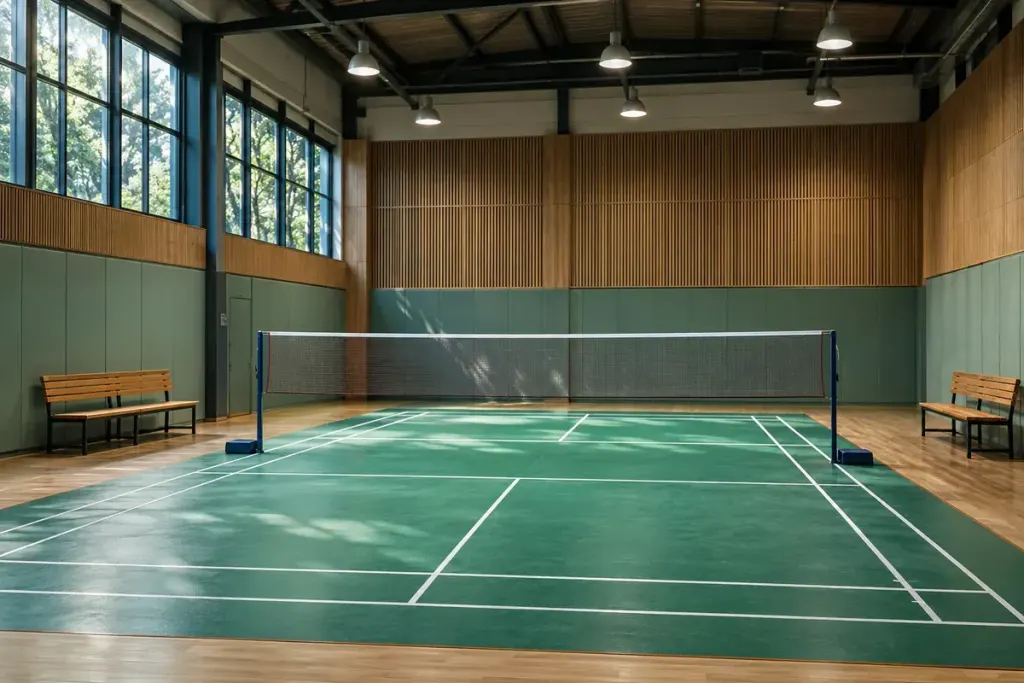
A deciding badminton game reaches 11–7 and the players walk to opposite ends. Nobody has won the game, and the score does not reset. They are following a change-of-ends rule that applies partway through the decider.
Under the standard 21-point format in the BWF Laws of Badminton, players change ends after the first game, after the second if there will be a third, and in the third when a side first scores 11 points.
Read the trigger from the score
“First scores 11” means one side reaches that score. It does not mean both sides must have 11, or that the players wait until 11 rallies have been played in total. In the example of 11–7, the change happens with those points already recorded.
This is useful for a casual match where the players are keeping their own score. Agree before starting that someone will call the change when the trigger arrives. It is easier than trying to reconstruct the score after several more rallies.
What if the change was missed?
The BWF rule says the players should change as soon as the mistake is discovered and the shuttle is not in play. The existing score stands. The missed change is not a reason to erase points or replay the whole game.
For example, if the oversight is noticed between rallies at 13–9 in the third game, the players correct their ends and retain 13–9. They do not restore the earlier 11-point score.
Changing ends should also be distinguished from choosing the correct service court. Those are separate parts of organising play; an end change does not invent a new score or automatically award the next service to the other side.
Lighting, background, and air movement can feel different at opposite ends of a hall, which makes the arrangement noticeable to spectators. For a competition using another approved scoring format, check its published rules rather than transferring the standard 21-point thresholds by assumption.