
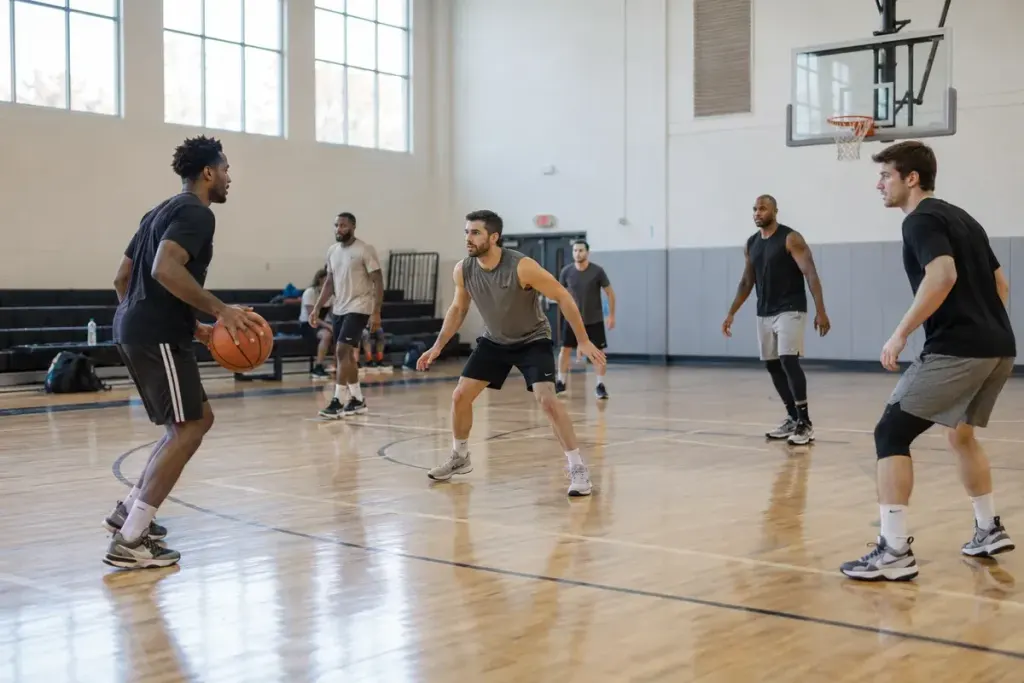
Watching the ball tells you where the action finishes. Watching away from it can reveal why the action became possible. On the next possession you study, choose one offensive player without the ball and follow that player until the possession ends.
Use a replay if available, but do not begin by stopping every second. First watch the movement at normal speed. Then replay with one question: how did that player’s position affect the space available to teammates?
Notice the defender as well as the attacker
A player standing away from the ball may keep a defender occupied, offer a passing option or prepare to cut. Look at the relationship between them. Is the defender close enough to challenge a catch, positioned to help near the basket, or moving between both responsibilities?
The FIBA WABC introductory coaching handbook uses simple spacing concepts to help players avoid crowding one area. A professional possession is more complex, but the basic observation remains useful: where players stand changes the options available.
Follow one change in position
Watch what happens when your chosen player cuts, screens or relocates. Does a passing lane open? Does another defender move? Does the ball handler gain room, or does the movement bring an extra defender into the same space?
Avoid deciding that every unsuccessful movement was a mistake. The defence may have responded well, the timing may have changed, or the intended action may be unclear from the camera angle. Describe what you can see before assigning an intention.
Compare the start and the finish
Pause at the beginning and near the decisive action. Sketch the rough positions of the five offensive players. An illustrative note might say that a corner player moved upward as a teammate drove, creating a clearer outlet. That is more precise than saying the team had good spacing throughout.
Then watch the possession again while following the ball. The two views can connect the visible pass or shot with the quieter movement that preceded it. Try another possession and see whether the same pattern repeats.
This exercise does not require memorising a playbook or declaring a winner in every tactical exchange. It builds a habit of observing relationships: player, defender, ball and available space. Over time, an ordinary possession becomes easier to read because you are watching the choices around the ball as well as the ball itself.
Another practical question: The Space Between Two Passers Matters in Volleyball Serve Receive.