
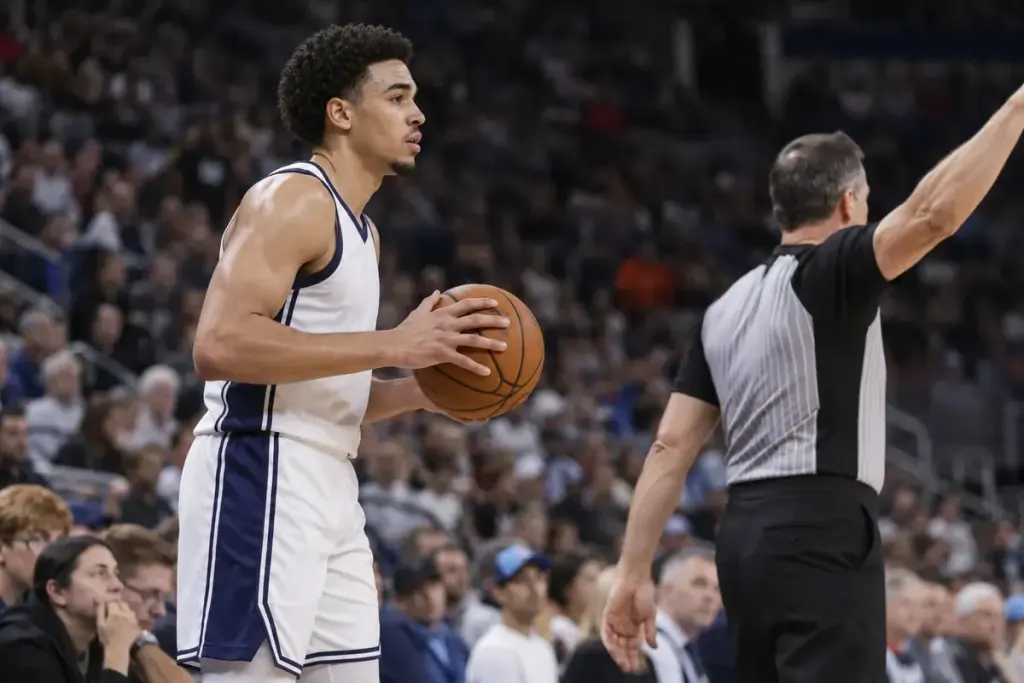
The inbounder searches for a teammate while the official counts. The pass leaves the hands just before the limit, then takes another moment to reach the receiver. For the throw-in time restriction, the release is the crucial event—not the catch.
The NBA rulebook, Rule 8 Section III, requires release within five seconds of receiving and controlling the ball. This article uses the NBA framework; check the rules adopted by the competition you are watching.
Follow the beginning and the end of the count
Under that NBA provision, the count is tied to receiving and controlling the ball, rather than to the moment a viewer first notices the player out of bounds. Watch the official’s administration of the restart and the release from the thrower’s hands.
A television replay may start after the count has begun. Counting five seconds from that edit can produce the wrong conclusion. Likewise, the time the ball spends travelling to a teammate is not simply added to the inbounder’s permitted holding time.
The other throw-in restrictions still apply
Releasing within five seconds does not make every pass legal. Boundary position, where the ball goes, who touches it and restrictions attached to the restart still matter. The rules also distinguish situations such as a designated spot and certain endline throw-ins after a score.
For a viewing exercise, watch one restart without following the intended receiver. Note when the inbounder receives control, the official’s count and the release. Then replay the movement of teammates to see why a passing option did or did not appear.
Keep the observation separate from a definitive officiating claim when the camera hides the relevant moment. Understanding the count makes the pressure on the inbounder clearer, but a cropped clip may still omit the information needed to judge the call.