
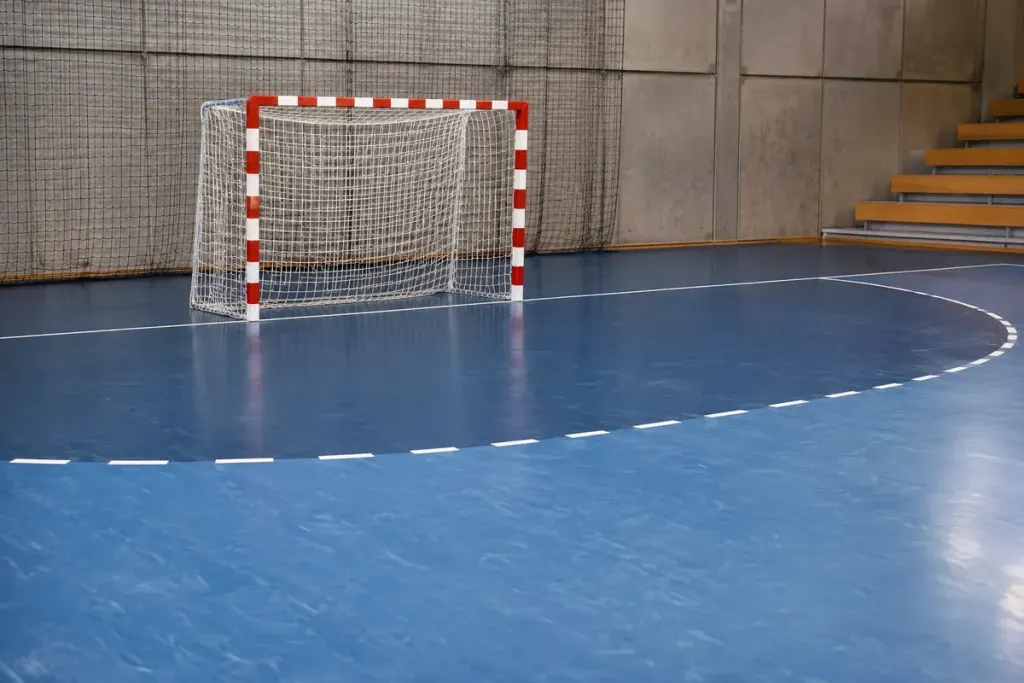
An indoor handball goalkeeper can stop a shot with a foot inside the goal area. That does not mean the same player has a special licence to use the lower leg anywhere on the court. The goalkeeper’s permissions depend on location and the action being performed.
Inside the area, the defensive role has exceptions
Rule 5 of the IHF Rules of the Game for Indoor Handball, effective July 2025, allows the goalkeeper to touch the ball with any part of the body while defending inside the goal area. Movement with the ball there is also treated differently from movement by a court player, although delaying a goalkeeper throw is not permitted.
The same rule allows a goalkeeper to leave the area without the ball and join play. Outside, the ordinary playing-area rules apply, with the specific exceptions stated in the rulebook. Special defensive freedom is therefore not attached permanently to the shirt.
Follow the ball and the boundary together
For a beginner watching a match, three observations help explain a disputed sequence:
- Was the goalkeeper inside or outside the goal area when the action occurred?
- Was the ball controlled, loose, or moving through the area?
- Did the action involve defending a shot, leaving the area, or bringing the ball back in?
Leaving the area with the ball under control and re-entering from the playing area with the ball are restricted. The exact restart depends on the circumstances, so a short replay without context may not be enough to identify the correct decision.
Do not borrow a rule from another version of handball
Beach and wheelchair handball have their own rules. For indoor play, use the current competition regulations and ask an official when learning a local competition’s application of them.
A productive viewing habit is to pause before naming the foul and describe what crossed the boundary first. That small change makes the goalkeeper’s role easier to understand: freedom to defend the goal is balanced by clear limits on how the player participates beyond it.