
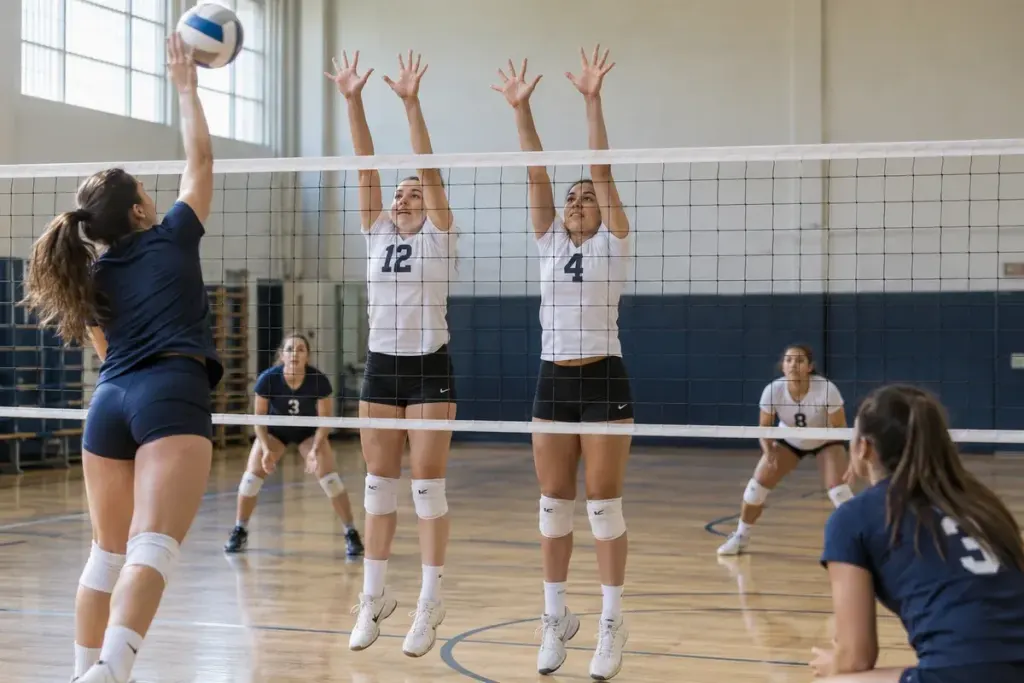
The hitter avoids the block and sends the ball towards a defender, who keeps the rally alive. The blockers receive no spectacular point, yet their positioning may have helped make that defensive touch possible.
A block is part of a team arrangement. Watching only whether the ball rebounds straight down misses how the front row and back court divide the space an attacker can use.
Watch the defence before the swing
Notice where the blockers set up and where the defenders move behind them. Are they preparing for a line attack, a cross-court route or a softer ball? The answer depends on the team’s system and the situation, so avoid assigning a universal position to every rally.
The FIVB Level I coaching manual describes blocking and defensive organisation as related parts of play. It is useful background for observing the relationship rather than treating the net action as an isolated contest.
Look for influence without contact
In an illustrative rally, a well-formed block may discourage one route and make another more likely. A defender positioned for that route can then have a better chance to play the ball. This does not prove the blocker controlled the hitter’s decision; it is a pattern to examine across several rallies.
A controlled touch off the block can also change the ball’s speed and give teammates an opportunity. The relevant question becomes whether the team can organise the next contact, not only whether the block ended the point.
Notice gaps and timing
A late second blocker, a gap between hands or a mismatch with the back-court plan can change what the defence must cover. From a broadcast angle, some details are hard to judge. Describe what is visible and leave uncertainty where the camera does not show the whole court.
Use a simple viewing note: block position, attack route and defensive result. Compare similar situations rather than a broken play with a well-organised attack.
Keep the analysis collective
When a ball lands, avoid automatically blaming the nearest defender or the blocker who did not score. The set, timing, communication and agreed coverage all contribute. Players should work on these relationships with their coach, not copy a formation from one highlight.
The next time you watch a match, follow the defenders behind the block. A successful defensive plan can be visible in a rally that continues quietly, long before anyone earns the point.