
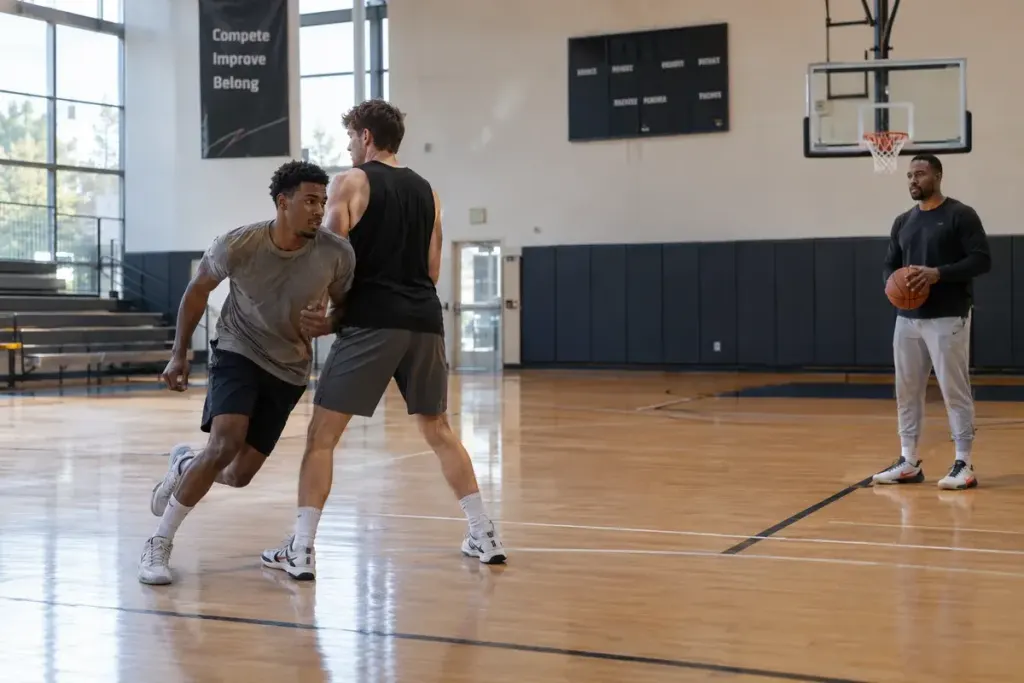
The pass looks simple because the receiver is suddenly free. A moment earlier, away from the ball, another player changed the defender’s route. Watching that interaction reveals why an off-ball screen can shape an attack before the passer releases anything.
Choose one possession and follow the intended receiver instead of the ball. Notice where the defender stands, where the screen is set and when the cutter begins to move. The timing between those actions often explains more than the final shot.
A screen creates a decision
The cutter may use the screen differently depending on how the defence responds. A defender who follows closely presents a different picture from one who takes a shortcut or exchanges assignments with a teammate. The offensive players need to read that response rather than complete a route mechanically.
The FIBA/WABC Level 1 coaching manual includes off-ball screening and down-screen concepts. It provides structured coaching context for the relationship between the cutter, screener and passer.
Include the passer in the picture
A receiver becoming available does not guarantee a successful pass. The passer needs an angle, enough control and an understanding of where the receiver is going. Releasing too early can send the ball toward traffic; waiting too long can allow the defence to recover.
When reviewing a clip, pause before the pass. Ask which space is opening and what the defender could still do. Then watch the rest without assuming that a made shot proves every preceding decision was correct.
- Track the receiver’s starting position.
- Notice the screen’s location and timing.
- Watch the defender’s response.
- Check the passing angle and delivery.
For practice, work with a coach on a controlled drill that introduces decisions gradually. Screens must be set legally and safely under the applicable rules; do not teach contact by encouraging players to collide or move into an opponent’s path late.
A useful review describes the sequence: the screen changed the route, the cutter read the defender and the passer recognised the opening. Sometimes the first cut creates space for someone else instead. Off-ball movement becomes easier to appreciate when you stop treating it as background activity and start watching how it changes the next available pass.