
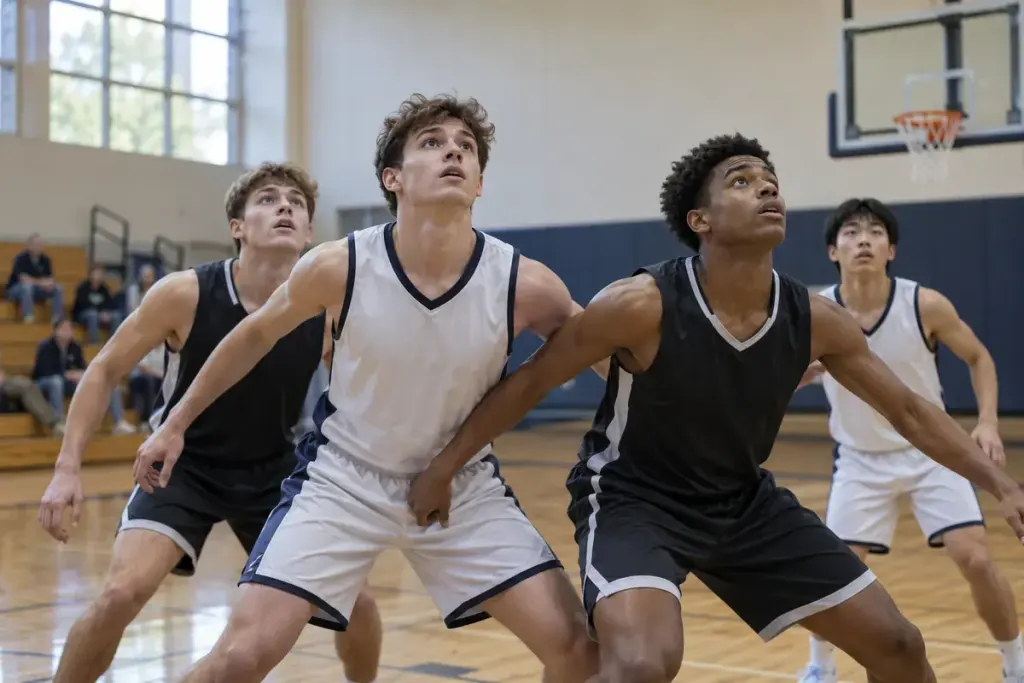
The shot is still in the air when the rebounding contest begins. A player who waits until the ball hits the rim may already have lost a useful position. Watch the players away from the shooter to see how the next possession is being shaped.
Boxing out is about establishing and maintaining a legal position between an opponent and the likely rebounding area. It is not permission to hold, push or move someone with illegal contact. The applicable rules and coaching guidance matter, especially when learning the movement.
Locate, position, pursue
As a viewing exercise, follow one defender when a shot goes up. Do they identify the nearby opponent, find a useful position and then move towards the ball? Or do they stare upwards while an attacker runs past?
The final part matters. Holding a good position without pursuing an available rebound can still leave the ball for someone else. Conversely, chasing the ball immediately may open a route for an opponent who began behind you.
Notice the shot and the space
Rebounds do not all arrive beneath the same point on the rim. Shot distance, angle and contact with the basket can change where the ball travels. A team needs players reading the bounce and communicating, not everyone occupying the same patch of floor.
For practice, work with a qualified coach on a controlled, appropriate drill. Begin with positioning and movement at a manageable intensity. Avoid turning a learning exercise into a contest of force or practising contact without understanding the rules.
When reviewing a possession, judge more than who eventually caught the ball. A teammate may have created space by managing their own matchup, while another gathered the rebound. That contribution can be missed if the analysis starts only with the catch.
The next time you watch a missed shot, rewind a few seconds. The most revealing action may happen before the rebound exists.