

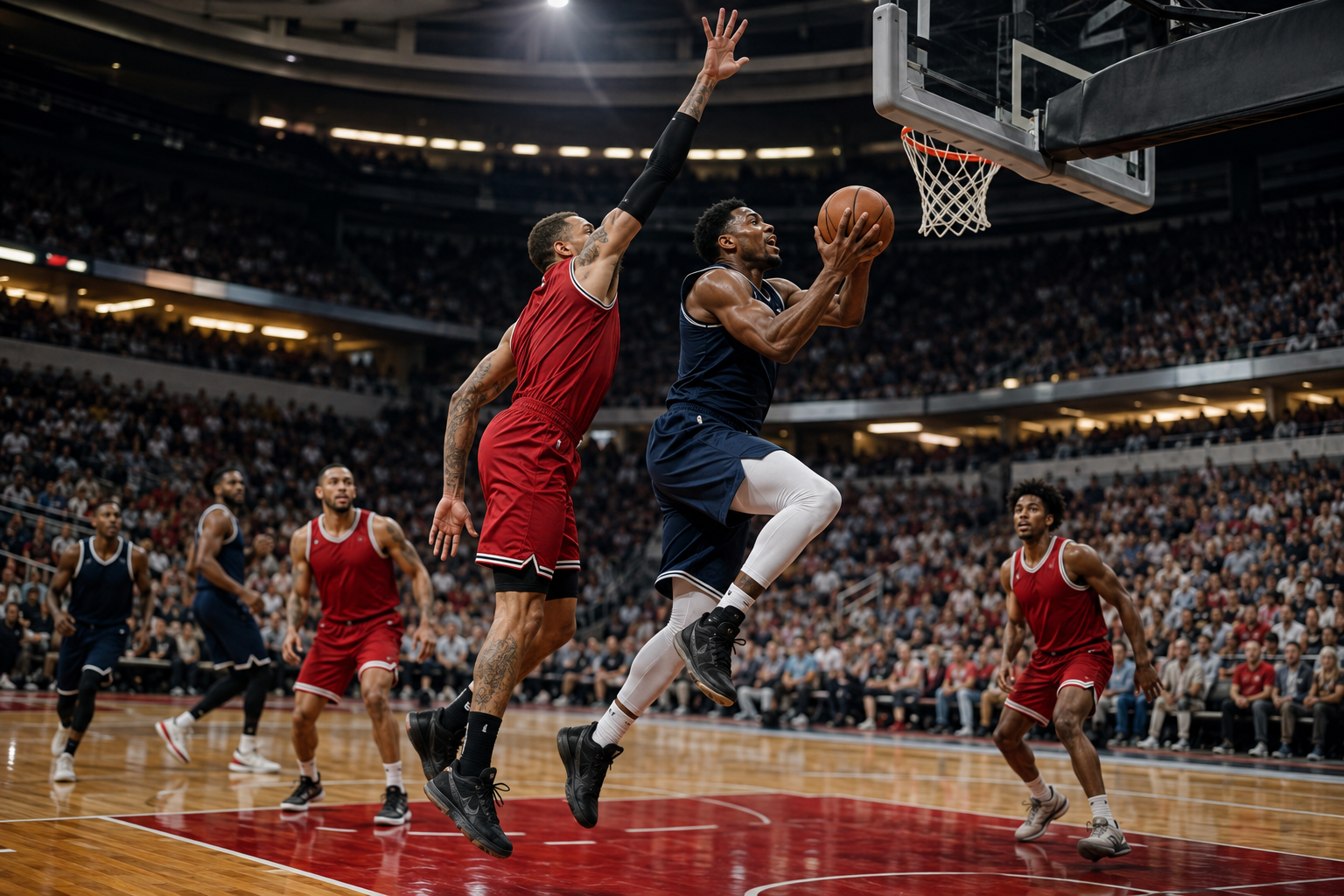
The race toward the championship series is no longer decided by star power alone. The strongest contenders combine elite shot creation, defensive versatility, lineup flexibility, and the composure required to survive high-pressure playoff possessions.
This season’s title picture features several teams capable of controlling a seven-game series. Some possess proven championship experience, while others are powered by younger cores entering their competitive prime.
The following contenders have the personnel and tactical identity to dominate the final stages of the season.
Oklahoma City Thunder: Youthful Energy With Championship-Level Structure
Oklahoma City represents the modern blueprint for building a title contender. The team plays with speed, creates constant defensive pressure, and attacks opponents using multiple ball handlers rather than depending on one traditional point guard.
Shai Gilgeous-Alexander is the center of everything. His balance, footwork, and ability to change pace make him extremely difficult to contain in isolation. He can punish defenders from the mid-range area, draw fouls, or create open shots when additional help arrives.
However, Oklahoma City’s greatest advantage may be its collective discipline. The Thunder rarely need to abandon their system when the game becomes tight. Their young players understand spacing, move the ball quickly, and remain active away from the basket.
Chet Holmgren provides rim protection without damaging offensive spacing. Jalen Williams adds another powerful scoring option who can defend multiple positions and initiate possessions when Gilgeous-Alexander is pressured.
In a high-level basketball competition, this combination of youth, length, and decision-making can overwhelm older opponents. The biggest question is whether the Thunder can maintain their composure when every possession becomes slower and more physical.
If their core handles that pressure, Oklahoma City could control the Finals through pace, defensive disruption, and relentless penetration.
Denver Nuggets: The Most Difficult Offense to Solve
Any serious championship prediction must include Denver. The Nuggets possess something every contender wants but very few can replicate: an offense built around a generational decision-maker at center.
Nikola Jokić changes the geometry of the court. Defenders cannot simply double-team him because he reads rotations before they fully develop. Playing single coverage is equally dangerous because of his strength, touch, and post-scoring efficiency.
Denver’s two-man game between Jokić and Jamal Murray remains particularly dangerous in the playoffs. Murray can pull up from deep, attack switches, or feed Jokić after forcing the defense into an uncomfortable rotation.
The Nuggets also understand how to control tempo. They do not need to play quickly to generate excellent opportunities. During close games, that patience becomes a major weapon because Denver is comfortable executing deep into the shot clock.
From a basketball league prediction perspective, Denver has one of the safest postseason profiles. Its best players already understand the emotional and tactical demands of a long playoff run.
Depth and defensive consistency will determine whether the Nuggets dominate or merely compete. When their supporting players hit open shots and defend without excessive fouling, Denver becomes nearly impossible to eliminate four times.
Boston Celtics: Built to Punish Every Defensive Weakness
Boston enters any title discussion with one of the most complete roster structures in basketball. The Celtics can score from multiple positions, switch defensively, and punish opponents who send too much help toward their primary stars.
Jayson Tatum gives Boston a versatile offensive engine. He can initiate from the perimeter, attack smaller defenders in the post, and make plays for teammates when opponents load up on his drives.
Jaylen Brown adds another explosive scorer capable of changing a game through transition attacks and direct drives. When both wings are aggressive, opposing defenses must protect the rim without surrendering clean three-point opportunities.
The Celtics are particularly dangerous because they can adjust their style without completely changing their identity. They can play through isolation, spread pick-and-roll actions, post mismatches, or use quick passing to create shots from the corners.
Their defensive flexibility is just as valuable. Boston can switch across several positions and force opposing stars to score against length. That versatility becomes crucial in the Finals, where teams repeatedly target the weakest defender on the floor.
Readers following the latest professional basketball analysis should pay close attention to Boston’s late-game execution. If the Celtics avoid stagnant possessions and continue moving the ball under pressure, their talent and spacing give them a strong chance to dominate.
Cleveland Cavaliers: A Balanced Threat From the Eastern Conference
Cleveland’s championship potential begins with balance. The Cavaliers can generate offense through dynamic guards while protecting the interior with size and athleticism.
Donovan Mitchell is the type of scorer who can decide a playoff game almost independently. He attacks gaps with power, creates separation from the perimeter, and is comfortable taking difficult shots when structured offense breaks down.
The presence of another capable ball handler prevents defenses from concentrating entirely on Mitchell. Cleveland can initiate possessions from different areas of the floor and force opponents to navigate repeated screens.
Defensively, the Cavaliers possess the length to challenge shots around the basket. That interior presence allows perimeter defenders to apply more pressure, knowing support is waiting behind them.
The key tactical challenge is offensive spacing. Cleveland must ensure that its larger lineups do not make the court too crowded. Sharp passing and confident outside shooting will be essential against elite playoff defenses.
If the Cavaliers solve that issue, they can become one of the season’s most dangerous teams. They have enough scoring, rim protection, and physicality to turn the championship race into a genuine battle.
New York Knicks: Physical Basketball Made for the Playoffs
The Knicks may not always produce the most glamorous basketball, but their identity fits the postseason perfectly. They compete for rebounds, defend with intensity, and force opponents to survive physically demanding possessions.
Jalen Brunson is the foundation of New York’s attack. His footwork allows him to create angles against larger defenders, while his strength helps him finish through contact. More importantly, he appears comfortable carrying an enormous offensive responsibility.
New York’s supporting cast supplies size, defensive commitment, and second-chance opportunities. Those qualities can change a playoff series because they reduce the number of comfortable possessions available to the opposition.
The Knicks are at their best when they turn games into battles of concentration. They attack the offensive glass, fight through screens, and make opponents work before crossing into their preferred scoring areas.
Their biggest concern is predictability. If the offense becomes too dependent on Brunson, elite defenses may force the ball away from him and challenge other players to create under pressure.
Still, the Knicks have the toughness required to survive close games. Their place among the leading basketball title contenders will depend on shooting efficiency, player availability, and the ability to maintain defensive intensity without exhausting the rotation.
Houston Rockets: The Aggressive Challenger Ready to Break Through
Houston has the profile of a team capable of accelerating its championship timeline. The Rockets combine athleticism, defensive aggression, and a young core that continues to improve.
Their defensive approach can be especially disruptive. Houston has players who can switch assignments, pressure ball handlers, and compete physically around the basket. That style can frustrate teams that rely heavily on predictable half-court actions.
Offensively, the Rockets must continue developing consistency. Young teams often look unstoppable in transition but encounter problems when playoff opponents slow the pace and take away their first option.
The solution is controlled creation. Houston needs reliable shot-making, calm decisions in pick-and-roll situations, and effective movement when its primary scorers face additional defenders.
The team’s ceiling is extremely high because its young players are still adding new dimensions to their games. If those improvements arrive at the right moment, Houston could become the surprise force of this season’s elite basketball showdown.
Experience remains the main obstacle. The Rockets may need to learn painful postseason lessons before reaching the final stage, but their physical tools make them a team no veteran contender will want to face.
Minnesota Timberwolves: Defense Capable of Changing an Entire Series
Minnesota’s strongest championship argument is built around defense. The Timberwolves possess size, athletic perimeter defenders, and enough rim protection to make every drive uncomfortable.
Anthony Edwards provides the explosive scoring required to complement that defensive foundation. He can attack in transition, create from isolation, and energize the entire team with aggressive finishes.
His development as a playmaker will be decisive. Playoff defenses will send multiple bodies toward him and attempt to force rushed passes. If Edwards consistently recognizes those rotations, Minnesota can produce open shots without sacrificing its attacking identity.
The Timberwolves can also challenge opponents with their physical dimensions. Their larger lineups control space around the basket and make traditional interior scoring difficult.
However, size must not become an offensive limitation. Minnesota needs enough shooting and movement to prevent defenders from crowding the paint.
When the floor remains balanced, the Timberwolves can dominate through defense, rebounding, and Edwards’ individual brilliance. That formula is highly valuable in the postseason because defensive effort usually travels even when outside shots stop falling.
Los Angeles Lakers: Experience Keeps the Door Open
The Lakers remain dangerous whenever their veteran leaders enter the postseason healthy. Few teams can match their collective experience in high-pressure elimination games.
LeBron James continues to influence games through strength, vision, and tactical intelligence. He identifies favorable matchups quickly and understands exactly when to increase the tempo or slow the game down.
Alongside him, an elite interior presence gives Los Angeles a major advantage around the basket. Rim protection, rebounding, and efficient scoring in the paint can force opponents to modify their normal rotation.
The Lakers’ championship chances will depend heavily on perimeter support. They need dependable shooting to create driving space and secondary playmaking to reduce the workload carried by their stars.
Defensive effort is equally important. Los Angeles cannot rely exclusively on size around the rim if its perimeter defenders repeatedly allow easy penetration.
According to the broader sports news landscape, veteran teams are often judged too quickly during the regular season. The Lakers may not dominate every week, but their experience makes them more threatening when a series becomes a tactical contest.
Which Team Is Most Likely to Dominate the Finals?
Oklahoma City may possess the most complete combination of youthful energy, defensive versatility, and elite individual creation. The Thunder can play quickly without losing structure, and their best players are entering the stage where talent begins turning into postseason authority.
Denver remains the most tactically difficult opponent. Any team facing the Nuggets must solve Jokić while protecting every passing lane around him—a problem without a simple answer.
Boston offers the deepest two-way profile. The Celtics have the shooting, wing strength, and defensive flexibility required to attack almost any matchup. Their greatest opponent may be their own late-game decision-making rather than another team’s system.
The Knicks and Timberwolves can transform a series through physical defense, while Cleveland has the balance to exceed expectations. Houston represents the high-upside challenger, and the Lakers remain capable of exploiting inexperience if their veteran core stays healthy.
The final prediction is a championship clash between Oklahoma City and Boston, with the Thunder holding a narrow advantage. Oklahoma City’s combination of penetration, length, rim protection, and lineup flexibility could eventually break Boston’s defensive structure.
Nothing is guaranteed once the playoffs begin. Injuries, shooting variance, and tactical adjustments can completely redirect a series. Yet if the leading contenders reach the decisive stage at full strength, Oklahoma City appears best positioned to turn promise into domination and finish the season as basketball’s new standard.