

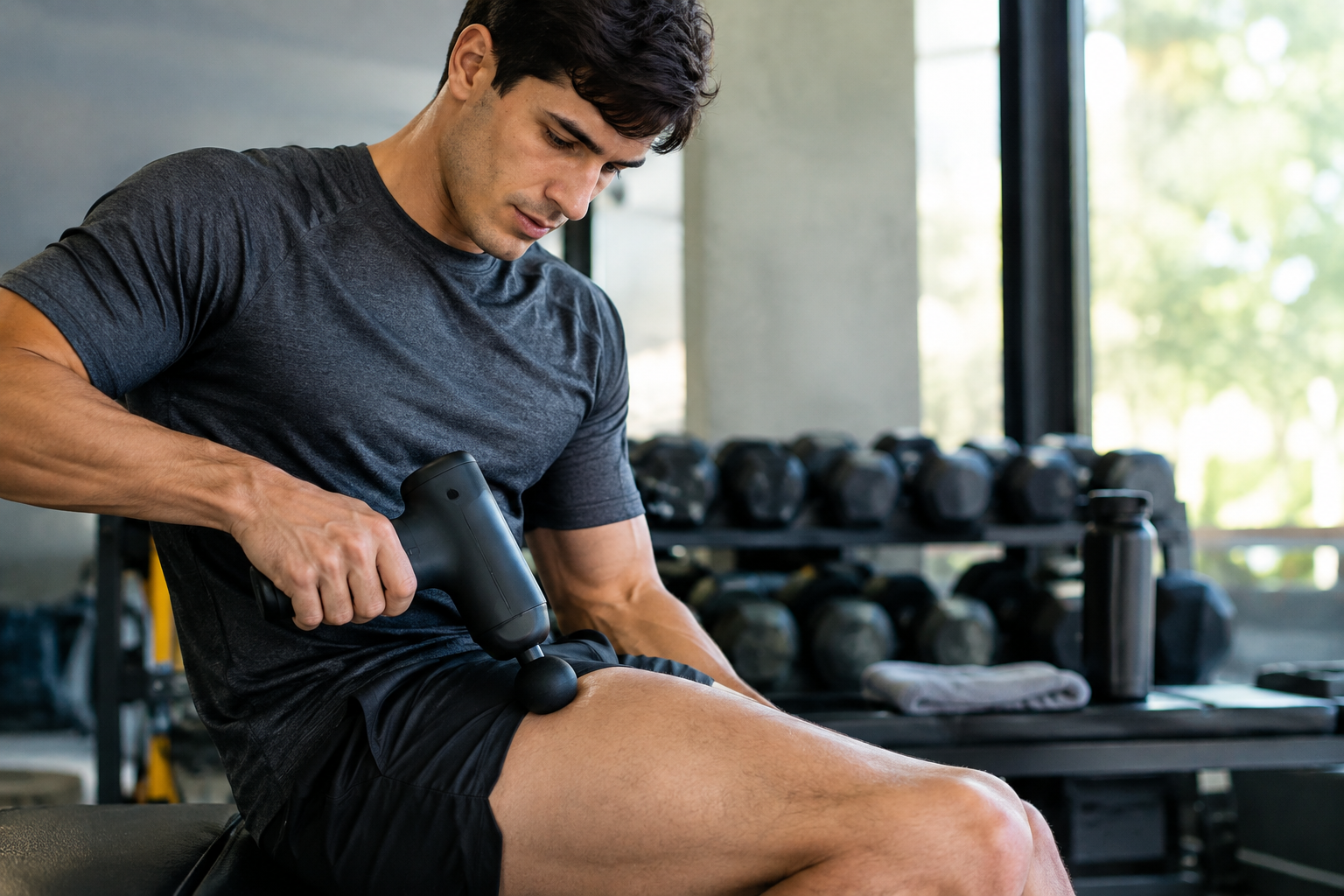
Are Massage Guns Effective? The Ultimate Guide to Athlete Recovery Tools
For athletes, recovery is just as important as training. Hard sessions create muscular fatigue, stiffness, and temporary soreness, making effective recovery strategies an essential part of staying consistent and performing well.
Among the many athlete recovery tools available today, massage guns have become especially popular. These handheld devices use rapid, repetitive movements to apply pressure to muscles and surrounding soft tissue.
But are massage guns actually effective, or are they simply another fitness trend?
The answer is more nuanced. When used correctly, massage guns may help reduce muscle stiffness, improve short-term range of motion, and make tired muscles feel more comfortable. However, they are not a replacement for sleep, proper nutrition, hydration, mobility work, or professional treatment when an injury is present.
What Are Massage Guns and How Do They Work?
Massage guns are portable devices designed to deliver repeated mechanical pressure to the body. A motor moves an attachment back and forth at high speed, creating what is commonly called percussive therapy.
Instead of holding steady pressure against a muscle, the device produces rapid pulses. Depending on the attachment, speed, and pressure, the sensation can range from a gentle vibration to a deeper muscular massage.
For athletes, massage guns for sports are generally used around training sessions. Some people use them before exercise to prepare specific muscle groups, while others use them afterward to manage tightness and general muscular discomfort.
Understanding Percussive Therapy
Percussive therapy works by repeatedly applying pressure to soft tissue. This mechanical stimulation can temporarily alter how the body perceives discomfort while also encouraging movement through areas that feel stiff.
The goal is not to aggressively break up muscle tissue. A massage gun should feel controlled and tolerable rather than painful.
The immediate benefit is often a feeling of reduced tightness or improved mobility. This can be particularly useful before activities that require a large range of motion.
Can Massage Guns Improve Muscle Recovery?
Massage guns may contribute to muscle recovery, but expectations should remain realistic.
Recovery is a complex biological process involving the nervous system, circulation, muscle repair, energy restoration, sleep, and nutrition. No handheld device can replace these fundamentals.
However, percussive therapy can be a useful addition to a broader recovery routine.
Reducing Muscle Stiffness
One of the most noticeable benefits is temporary relief from muscle stiffness. After strength training, running, jumping, or intense sport-specific work, certain muscles may feel tight or restricted.
Gentle massage-gun use can make these areas feel more relaxed. This may help athletes move more comfortably during subsequent mobility exercises.
Supporting Short-Term Range of Motion
A massage gun can also be useful when an athlete feels restricted before training.
For example, gently treating the quadriceps before a workout may help an athlete perform dynamic movements more comfortably. The objective is not to force flexibility but to prepare the body for movement.
This makes percussive therapy particularly interesting as part of a dynamic warm-up rather than as a standalone treatment.
When Should Athletes Use a Massage Gun?
Timing depends on the purpose.
There is no universal rule that says massage guns should only be used before or after exercise. Different situations call for different approaches.
Before Training
Before exercise, use a massage gun briefly and at a comfortable intensity.
Focus on large muscle groups that will be heavily involved in the upcoming activity. For a basketball player, this might include the quadriceps, hamstrings, glutes, and calves.
The objective is to encourage comfortable movement without exhausting or irritating the muscles.
A short session can be followed by dynamic movements, sport-specific drills, and a gradual increase in intensity.
After Training
Post-workout use can focus on areas that feel tight or fatigued.
Rather than applying maximum pressure, move the device slowly over the muscle and keep the sensation comfortable. The goal is relaxation and temporary relief, not creating additional soreness.
Using the device as one component of a larger recovery routine can be more useful than relying on it alone.
Best Practices for Using Massage Guns
Massage guns are generally simple to operate, but technique matters.
Poor technique can turn a potentially useful recovery tool into an uncomfortable or counterproductive experience.
Start With a Low Setting
Always begin with a lower speed and lighter pressure.
If the sensation is comfortable, gradually increase intensity if necessary. More power does not automatically mean better results.
Athletes should avoid chasing the feeling of extreme pressure. A session should not leave the treated area bruised, numb, or significantly more painful.
Keep the Device Moving
Avoid holding the massage gun aggressively against one small spot for an extended period.
Instead, move it gradually across the muscle. This distributes the mechanical pressure and makes it easier to control the intensity.
Large muscle groups are generally better targets than small, delicate areas.
Spend Less Time Than You Think
Longer sessions are not necessarily more effective.
A few minutes on a muscle group may be sufficient for a warm-up or recovery session. Spending excessive time on one area can increase irritation and soreness.
Think of the massage gun as a supplement to training and recovery rather than an activity that needs to dominate the routine.
Where Should You Avoid Using a Massage Gun?
Knowing where not to use the device is just as important as knowing where to use it.
Avoid directly applying aggressive pressure over bones, joints, the front or side of the neck, open wounds, irritated skin, or areas with unexplained pain.
Extra caution is also appropriate around sensitive anatomical structures and areas where nerves or blood vessels are close to the surface.
Don’t Massage an Acute Injury
A massage gun should not be used to aggressively treat a fresh injury simply because the area feels painful or tight.
Swelling, significant bruising, sharp pain, instability, or sudden loss of function may indicate that professional assessment is more appropriate.
In these situations, recovery should be guided by the nature of the injury rather than by the assumption that deeper massage will accelerate healing.
Massage Guns vs. Other Athlete Recovery Tools
Massage guns are only one option among many athlete recovery tools.
They can be convenient because they are portable, quick to use, and relatively easy to incorporate into a training schedule. However, they should complement—not replace—fundamental recovery strategies.
Sleep remains one of the most important factors in athletic recovery. Adequate nutrition provides the energy and nutrients needed to support training adaptation, while hydration helps maintain normal physiological function.
Mobility exercises, light aerobic activity, stretching, and appropriate rest can also play valuable roles.
For athletes dealing with recurring pain or performance limitations, individualized exercise programming from a qualified sports professional may be more beneficial than repeatedly treating symptoms with a massage device.
How Athletes Can Build a Better Recovery Routine
A massage gun becomes more useful when it fits into a structured recovery strategy.
After demanding training, athletes can prioritize hydration and nutrition before using a massage gun for areas that feel tight. Light mobility work can then encourage comfortable movement.
On easier days, gentle activity can help maintain movement without adding excessive training stress.
Keeping track of soreness and performance can also help athletes recognize patterns. If the same area repeatedly requires intensive treatment after training, the underlying issue may involve workload management, technique, mobility, strength, or recovery habits.
Listen to Your Body
Recovery should be responsive rather than automatic.
If a muscle feels mildly tight, gentle percussive therapy may be reasonable. If an area produces sharp, persistent, or unusual pain, increasing massage intensity is unlikely to be the appropriate solution.
Athletes should learn to distinguish normal post-exercise discomfort from symptoms that require further evaluation.
Common Mistakes With Massage Guns
One of the biggest mistakes is assuming that maximum intensity produces maximum recovery.
Another is using the device directly on painful joints, bones, or injured tissue.
Some athletes also use a massage gun for an excessive amount of time because the temporary sensation of relief encourages repeated treatment. This can lead to unnecessary irritation.
A better approach is to use the lowest effective intensity for a specific purpose and then move on to active recovery, mobility, rest, or training as appropriate.
Are Massage Guns Effective for Athletes?
So, are massage guns effective?
They can be.
Massage guns may provide short-term improvements in perceived muscle soreness, stiffness, and mobility. Their greatest value is often as a convenient addition to an athlete’s existing recovery routine rather than as a miracle solution.
Understanding this distinction is important. Effective athlete recovery tools should support good training habits, not create the illusion that recovery can be automated.
For athletes interested in building a complete approach, sports recovery techniques can include sleep optimization, hydration, nutrition, mobility work, active recovery, and sensible training-load management.
A massage gun can then serve as a practical tool within that system.
The Bottom Line on Percussive Therapy
Percussive therapy offers athletes a convenient way to address temporary muscle tightness and improve how their bodies feel before or after exercise.
Used with controlled pressure, sensible timing, and realistic expectations, massage guns can be a useful part of a modern recovery routine.
The key is to avoid treating them as a cure-all.
For better muscle recovery, prioritize the fundamentals first. Use massage guns strategically, pay attention to how your body responds, and avoid aggressive treatment when pain may indicate an injury.
When combined with smart training and other athlete recovery strategies, massage guns can become one practical tool in a broader approach to staying healthy, mobile, and ready for the next session.
Athletes can also explore performance training insights and sports fitness guidance to develop a more complete approach to preparation and recovery. The best recovery strategy is rarely based on one device—it is built from consistent habits that help the body adapt to training over time.