
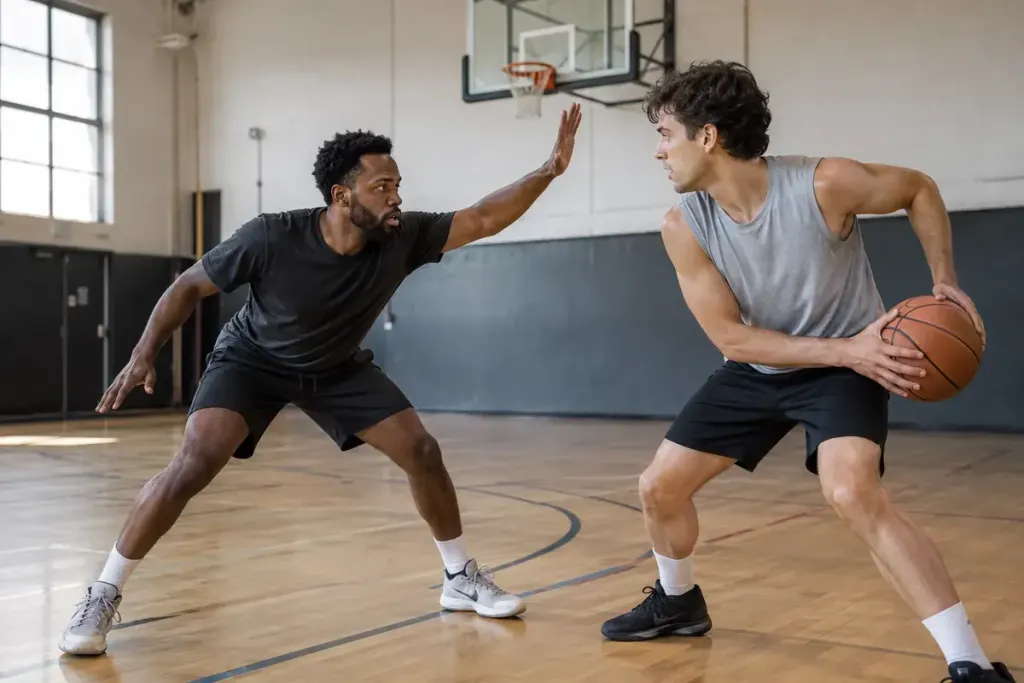
A defender sprints toward a shooter, raises a hand and appears to have done the job. A moment later, the attacker drives past into open space. The closeout has to be understood as part of the next action, not judged only by how dramatic the initial contest looks.
For viewers learning to read basketball, this is an excellent sequence to study. You can see the defender’s problem clearly: reduce the shooter’s time while arriving with enough control to respond to a drive or pass.
Pause the replay when the ball arrives
Look at the distance between defender and attacker. Then notice the attacker’s readiness: feet set or still moving, ball already in a shooting position or being gathered. The defender is responding to that situation, not closing out against an identical threat on every possession.
Continue the replay slowly. Does the defender arrive under control, or does their momentum carry them past the attacker? A flying contest may bother one shot while leaving a clear route after a shot fake.
Follow the first dribble
The attacker’s next move reveals what the closeout conceded. They may drive toward the middle, toward the baseline or into a teammate’s help position. The defensive plan and nearby players matter; an angle that looks unusual in isolation may be intended to direct the ball somewhere.
Watch the helpers too. If another defender stops the drive, who covers the player they left? A closeout can start a chain of rotations, and the eventual open shot may come several passes later.
Do not infer the entire game plan from one possession. A slip, a late recovery or a mistaken assignment can produce the same visible result for different reasons.
Try a five-possession viewing exercise
Choose five catches on the perimeter. For each, note the defender’s starting distance, whether they stayed balanced and what the attacker did next. Record the outcome without immediately labelling the defence good or bad.
Compare the sequences afterward. You will begin to notice that successful defence often looks controlled rather than spectacular. The important moment is not always the hand near the ball; it can be the position that makes the next move less comfortable.