
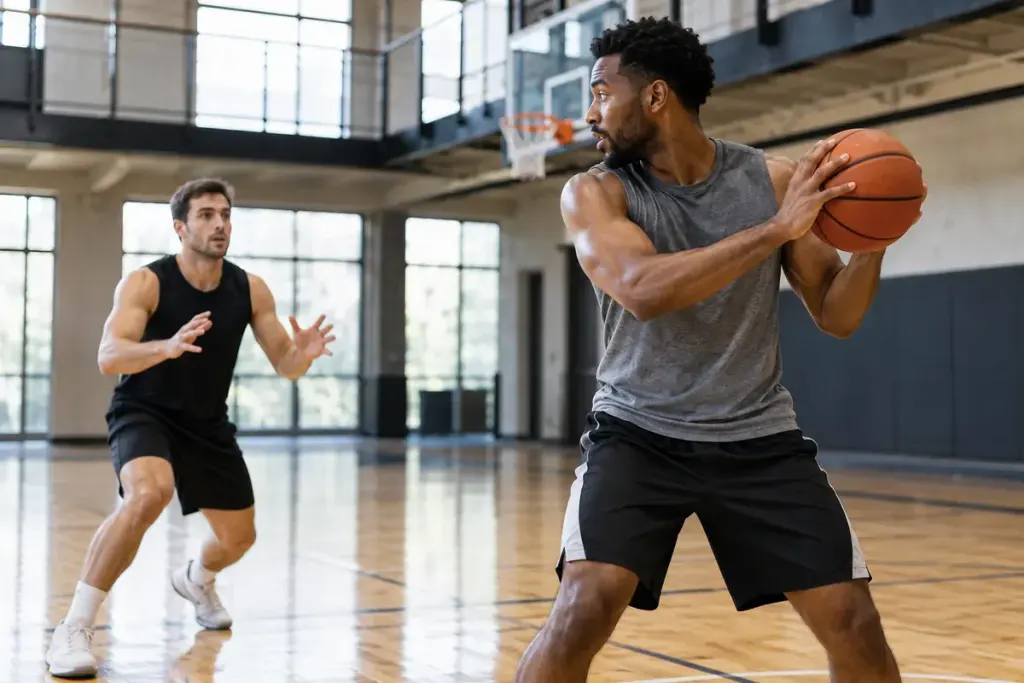
The rebounder has secured the ball, but the nearest teammate is standing directly behind a defender. Shouting for the pass does not create a clear route. An outlet begins with the receiver becoming available.
Watch away from the rebounder
On a replay, follow the intended receiver as the shot comes off the rim. Where are they relative to the sideline, defenders and the rebounder’s view? Do they move into a visible passing lane or simply run farther away?
The useful position depends on the team’s system and pressure. There is no single spot that suits every possession. A shorter, clearer connection can be preferable to a long pass that asks the rebounder to throw through traffic.
Notice the receiver’s next action
Being open for the catch is only part of the job. Can the receiver see the court after receiving, protect the ball and make the next decision? A player facing an awkward direction near the boundary may have less useful space than the first camera angle suggests.
For a coach-led practice, begin with a simple rebound-and-outlet sequence at an appropriate pace. Agree the movement and communication, then add defensive pressure gradually as the coach considers suitable. Do not turn a learning drill into repeated blind long throws.
Compare the pass that was available with the one attempted
When a possession breaks down, identify whether the problem was the receiver’s position, the passing route, timing or execution. Several can interact. Blaming only the person who last touched the ball misses the work that made the pass difficult.
Also watch the other teammates. Their spacing can open or close the route without either player involved in the outlet moving very much.
Try analysing three possessions without following the ball immediately after the rebound. Record where the first receiver appeared and what options the catch created. You may find that the transition was made easier before the pass left the rebounder’s hands.