
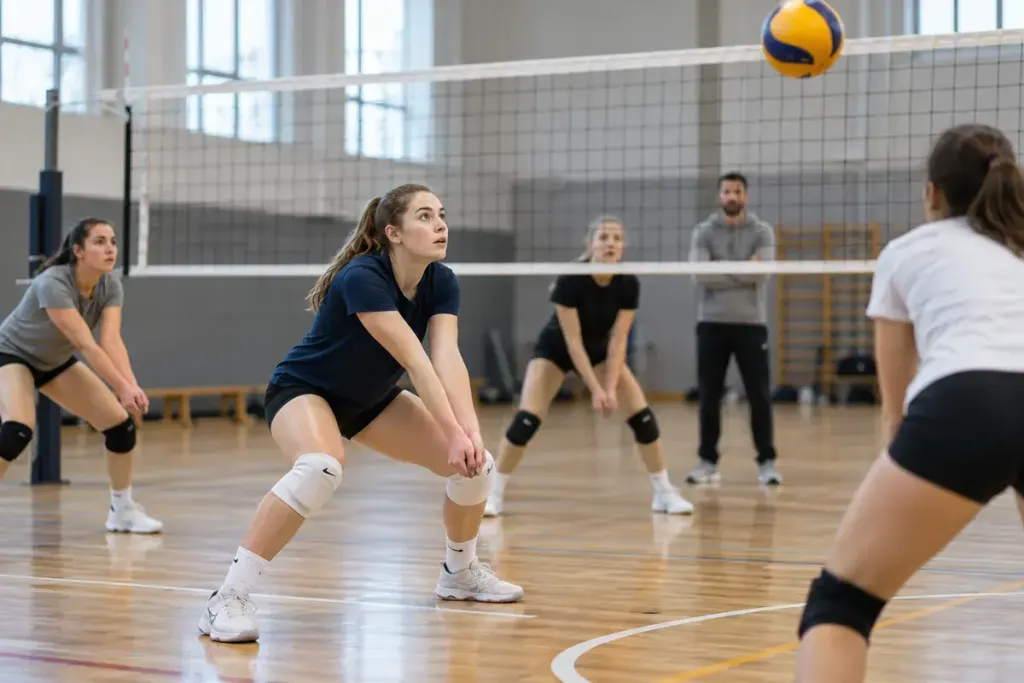
The opposition sends a gentle ball over the net. Everyone relaxes for a moment, then two players move toward it and the setter has no clear option. An apparently easy return can expose a team’s organisation more clearly than a hard attack.
In coaching language, a free ball is a relatively manageable return that offers time to organise the next attack. It is not a pause in the rally or a guarantee of winning the point. The team still needs a controlled first contact and coordinated movement.
Call early and know the target
Agree with the coach who takes responsibility for likely areas and what communication the team uses. The player receiving should aim for the team’s planned setting area rather than simply keeping the ball somewhere in the air.
Other players have work to do too. The setter prepares to organise the second contact, while potential attackers move according to the team’s system. Watching the receiver without preparing the next action wastes the extra time the return provided.
Practise the transition, not only the pass
A coach-led drill can begin with a controlled free-ball feed and continue through the team’s intended attack sequence. Adjust the difficulty to the players’ level. The FIVB coaching resources provide broader technical material for structured practice.
In an illustrative review, note whether the team called the ball, produced a usable first contact and offered the setter appropriate options. A powerful final hit does not erase confusion earlier in the sequence, while a controlled attack can still reflect good organisation even if the rally continues.
Keep ordinary volleyball rules in mind, including team contacts and player-position restrictions. A free-ball opportunity does not create an exception to them.
After a short practice set, ask which movement was late. Was the receiver uncertain, the setter unavailable or an attacker still watching the ball? A specific answer gives the next repetition a purpose. The opportunity is valuable because it gives the team time to organise; use that time deliberately.