
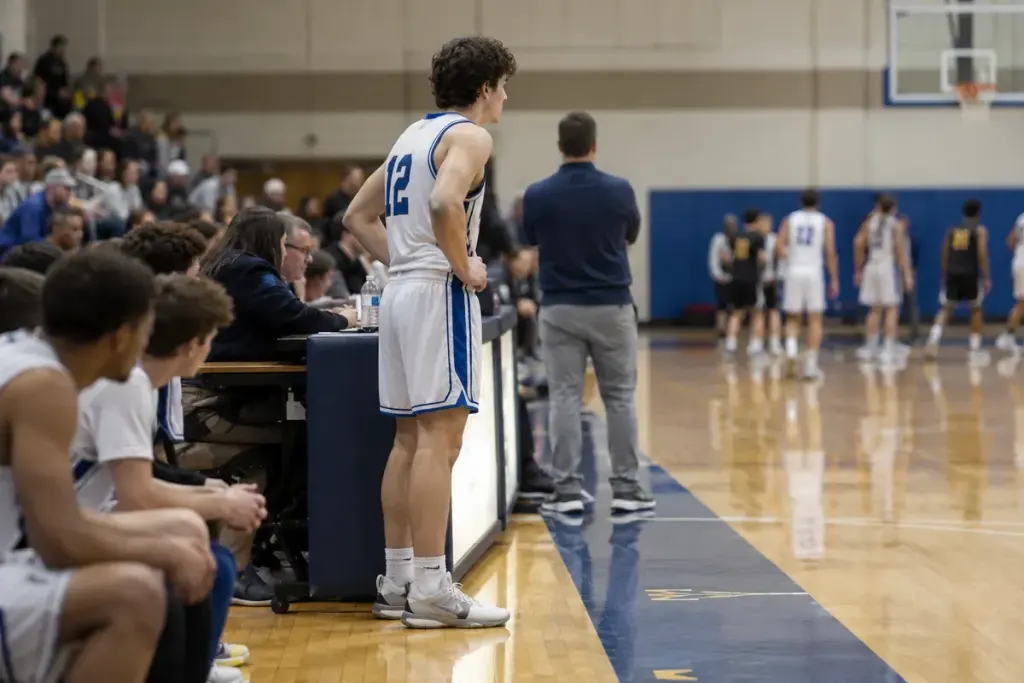
The coach points to a player on the bench. The player stands up, but that instruction alone does not make them part of the five on court. There is still a substitution procedure to follow.
For games using the FIBA Official Basketball Rules 2026, Article 19 sets out that process. The details matter because an intended change, a request at the table and permission to enter are separate moments.
Request first, then wait for entry
The substitute requests the change at the scorer’s table, using the appropriate signal or taking the substitution chair, ready to play. Under this procedure, it is the substitute who makes the request, rather than the head coach or first assistant coach.
When a substitution opportunity begins, the timer signals to notify the referees. The substitute remains outside the boundary until the referee signals and beckons them onto the court. Standing near the table is not permission to walk directly into play.
A substitution opportunity depends on the state of the ball, clock and game. It is not created by every whistle or every moment when a player would prefer to leave. Article 19 contains specific provisions for free throws, late-game scoring and other situations, so those details should be checked against the full rule.
Practise the routine before a match
For a new team, a short rehearsal can make the procedure less distracting. Identify where the table and substitution chairs will be, have a player approach ready to enter, and practise waiting outside the boundary for the referee’s invitation.
Then discuss the playing assignment separately. Who is being replaced, and what role will the incoming player take? Settling that communication before entry avoids trying to work everything out while teammates are already preparing for the next possession.
For spectators, watching the table as well as the bench explains why a player can be ready for several moments without entering. The officials are managing the legal opportunity, not simply responding to the first person who stands up.
Check the competition’s adopted rules before applying this sequence to a different league, school event or modified youth format. This explanation follows the FIBA procedure; local competitions may publish their own variations and administrative instructions.