
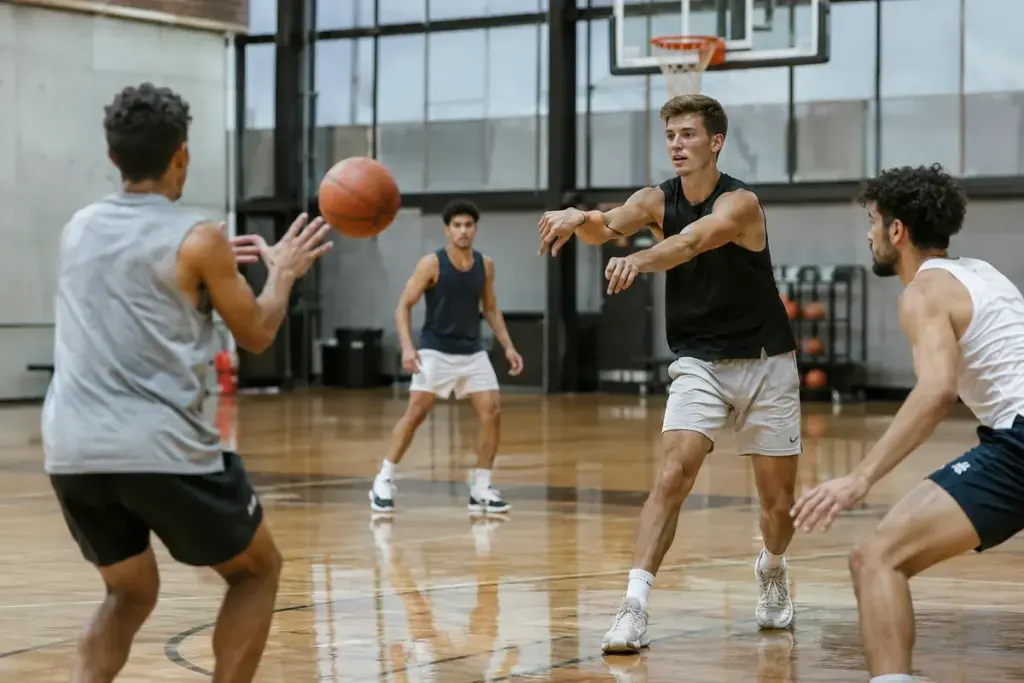
A pass travels between two teammates. For a moment, nobody is holding the ball. Yet the attacking team still has team control under FIBA rules. That distinction helps explain why a loose-looking moment does not necessarily begin a new possession.
Article 14 of the FIBA Official Basketball Rules 2026, valid from 1 October 2026 separates the start, continuation and end of team control. Control continues while teammates pass the ball. It ends when an opponent gains control, the ball becomes dead, or the ball leaves the shooter’s hands on a shot or free throw.
Follow one sequence
Imagine A1 dribbling, passing to A2, and A2 shooting. During the pass, team A retains control. Once A2 releases the shot, that control ends even though the ball has not yet reached the basket. A later rebound must be considered from that new situation.
Now add a defender’s touch during the pass. A touch is not automatically a controlled catch. The 2026 FIBA interpretations for Article 14 illustrate the difference between tapping a pass and gaining control of it. The distinction matters when assessing whether control changed teams.
Watch the event that changes the status
For a viewing exercise, pause at three moments: the pass leaving A1, the defender touching it, and A2 releasing a shot. Ask what actually happened at each point rather than assigning possession from the jersey nearest the ball.
- Was this a pass or a shot?
- Did the defender merely deflect the ball or gain control?
- Did an event make the ball dead?
Keep this exercise separate from deciding every possible clock or foul consequence. Those decisions require the relevant additional rules and the complete sequence of play.
The practical lesson is that team control is a defined status, not a description of who seems most likely to collect the ball next. Using that definition makes a replay discussion more precise and helps explain why an airborne pass and an airborne shot are treated differently.