
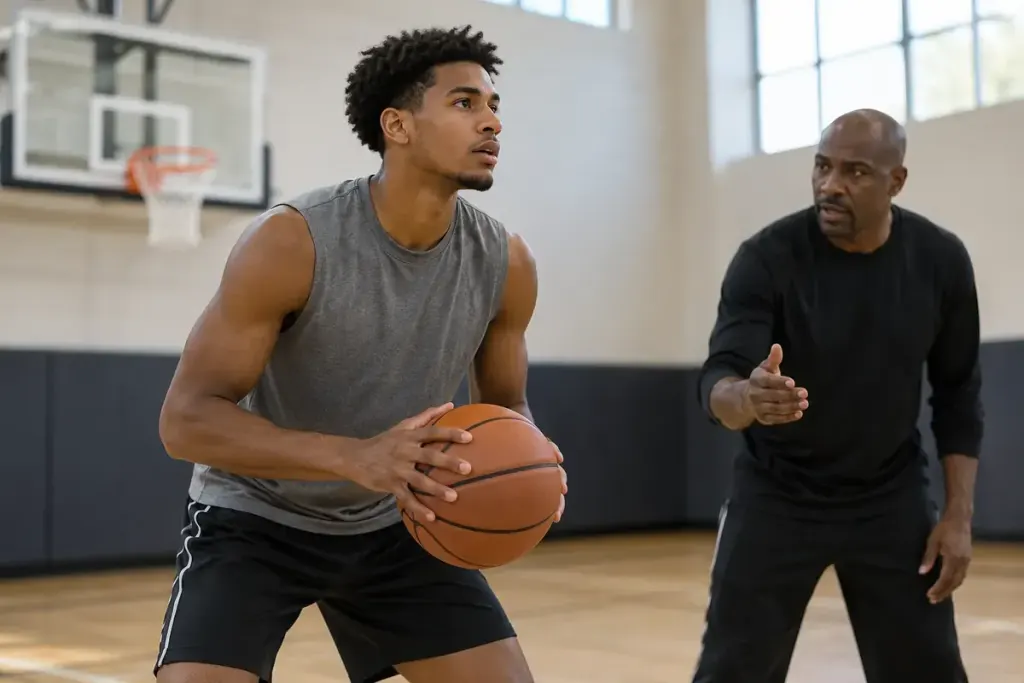
A player dribbles, catches the ball with both hands and looks for a pass. The defender backs away, leaving space. That new space does not itself allow the player to start dribbling again.
FIBA’s 2026 official rules changes, hosted by the Upper Austrian Basketball Association, clarify article 24.2. After the first dribble ends, a second requires a loss of control through one of the listed situations: a shot for goal, an opponent touching the ball, or a pass or fumble in which another player touches or is touched by the ball.
Compare the sequence, not the pause
In a simple example, a player finishes a dribble, holds the ball and then bounces it again without an intervening qualifying event. Waiting a second, pivoting or changing hands does not create a fresh dribble.
Now change the sequence: after the pickup, an opponent knocks the ball loose and the player regains it. That intervening opponent touch is relevant to the second-dribble rule. In a real game, the officials still assess the complete play and any other applicable rules.
Practise naming what happened
During a slow, coach-led demonstration, ask observers to identify when the first dribble ended and what happened before another bounce. Use short descriptions such as “held with two hands,” “opponent touched it” or “no other player touched the fumble.” Precise observations are more useful than calling every awkward bounce the same violation.
Keep the demonstration separate from a competitive scramble. Let players rehearse a pass or legal pivot after picking up the ball, so they have an option besides trying to restart a dribble.
Use the rules adopted by the league you are playing in; this explanation concerns the FIBA wording. The key habit is to follow control and the intervening event. A defender moving away changes the opportunity on the court, but it does not erase the dribble that has already ended.